From the blog
Why Your HVAC Filter Size Actually Matters More Than You Think
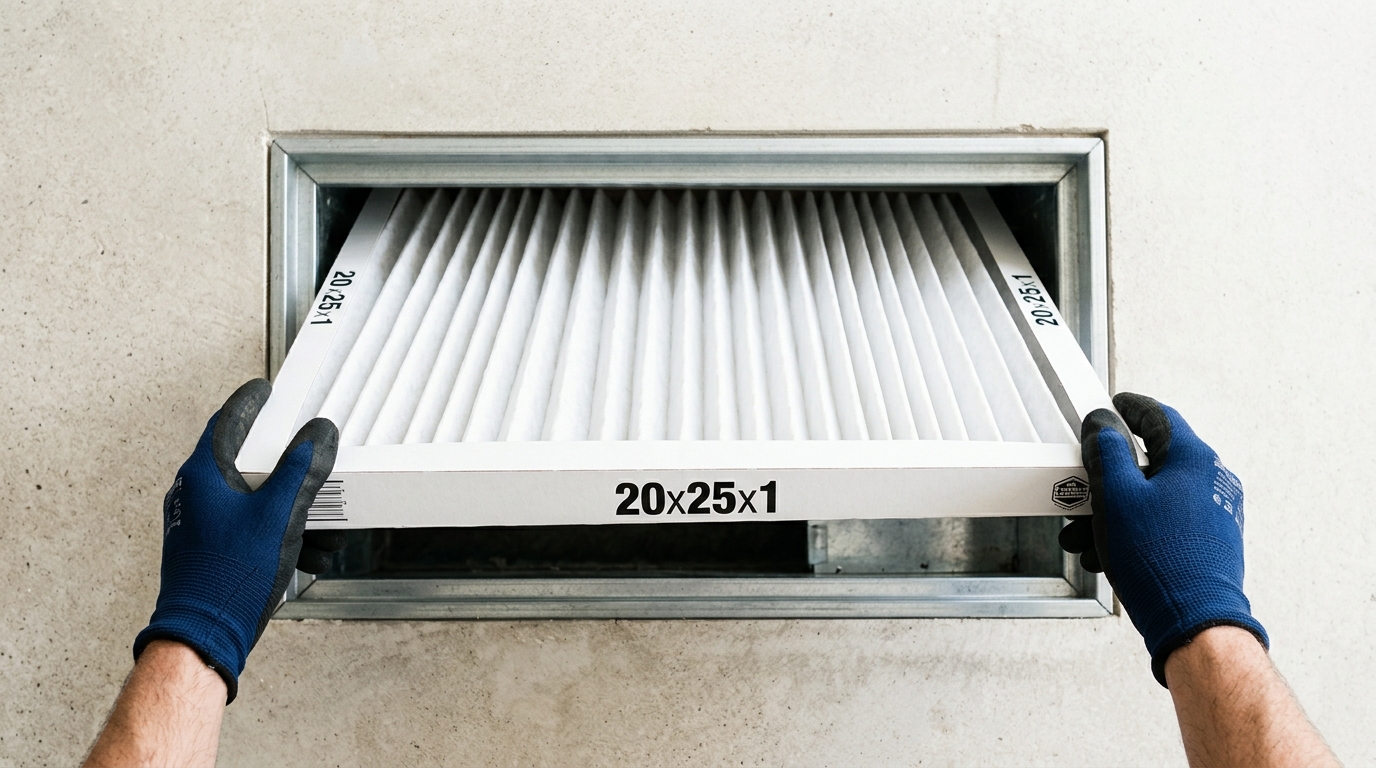
Using the wrong HVAC filter size reduces system efficiency by up to 15%, accelerates wear on your blower motor, and can void manufacturer warranties - all problems that a correctly sized filter eliminates entirely. Filter size is not a minor detail. It's the foundation of how your entire HVAC system breathes.
Most homeowners treat filter replacement as a simple chore: grab whatever's on the shelf, shove it in, done. But that approach costs money, degrades air quality, and shortens equipment life. Here's exactly why size matters - and how to get it right every time.
What HVAC Filter Size Actually Means
Every HVAC filter has three dimensions printed on its frame: length × width × depth (thickness), measured in inches. A filter labeled 20x25x1 is 20 inches long, 25 inches wide, and 1 inch thick. The nominal size printed on the box is slightly larger than the actual physical dimensions - typically by about ½ inch on each side - because filters need room to slide into the slot without forcing.
Common residential filter sizes include:
- 16x20x1- common in smaller single-story homes
- 20x25x1- one of the most widely used residential sizes
- 16x25x4- deep media filters, often found in high-efficiency systems
- 20x20x1- typical in older construction
- 14x25x1- found in many horizontal air handlers
There are over 200 nominal filter sizes on the market. Your system is engineered for one specific size - or a narrow range - and deviating from that spec creates measurable problems.
What Happens When You Use the Wrong Size
This is where most homeowners underestimate the stakes. Using a filter that's too small leaves gaps around the edges. Air takes the path of least resistance, which means it bypasses the filter media entirely and pulls unfiltered dust, pet dander, and debris straight into your system's coils and blower.
Using a filter that's too large causes buckling or improper seating, creating the same bypass problem - plus the risk of the filter collapsing into the blower wheel, which is a repair that routinely costs $400–$900.
Wrong Filter Size vs. Correct Filter Size: Key Differences
Factor Wrong Size Correct Size Air filtration effectiveness Partial to none (bypass gaps) Full media coverage System airflow (CFM) Restricted or uncontrolled Within design spec Blower motor stress High (works harder against resistance) Normal operating load Evaporator coil cleanliness Coil accumulates debris Coil stays clean Energy consumption Up to 15% higher At rated efficiency Warranty status Potentially voided MaintainedFilter Thickness: The Dimension People Ignore
Length and width get most of the attention, but depth - or thickness - is equally important. Standard 1-inch filters are the most common, but many modern systems are engineered around 4-inch or 5-inch deep media filters. Those thicker filters hold significantly more media surface area, which means longer replacement intervals (typically 6–12 months vs. 1–3 months for 1-inch filters) and often better filtration at lower static pressure.
Switching from a 1-inch to a 4-inch filter without verifying your system's slot depth is a mistake. Forcing a 4-inch filter into a 1-inch slot doesn't just fail to fit - it warps the filter frame and destroys the seal. Confirm your slot depth before buying.
How to Find Your Correct Filter Size in 3 Steps
- Check the existing filter. Pull out your current filter and read the nominal size printed on the cardboard frame. If it's the correct size and seated properly, buy the same dimensions.
- Measure the slot. If your old filter is damaged or unlabeled, measure the return air slot directly - length, width, and depth. Round up to the nearest standard nominal size (the filter will be slightly smaller than the slot by design).
- Consult your equipment manual. Your air handler or furnace manual specifies the required filter size. This is the definitive source, especially for systems with built-in filter compartments.
MERV Rating and Size Work Together
Filter size determines whether the filter fits. MERV rating determines how effectively it filters. MERV (Minimum Efficiency Reporting Value) runs from 1 to 16 for residential applications, with higher numbers capturing smaller particles.
The important connection between size and MERV: a higher MERV filter is denser, which increases static pressure - the resistance the blower must overcome to move air. A correctly sized filter frame ensures the blower is pushing air through the media rather than around it. If your filter is undersized and air is bypassing the filter, upgrading to MERV 13 accomplishes nothing.
Most residential systems perform well with MERV 8–11. MERV 13+ filters require verification that your blower can handle the increased static pressure without overheating or underperforming.
The Real Cost of Getting It Wrong
Let's put hard numbers to this. A dirty or bypassed evaporator coil can reduce system efficiency by 30–40%. A professional coil cleaning runs $150–$400. A blower motor replacement costs $400–$1,500 depending on the unit. A new HVAC system - which a decade of dirty coil operation accelerates - runs $5,000–$12,000 installed for most residential applications.
A correctly sized MERV 8 filter costs $8–$25 and replaced every 1–3 months prevents all of the above. The math is not complicated.
When to Call a Professional About Filter Sizing
If your system has a non-standard return air configuration, if you've recently had ductwork modified, or if you're transitioning to a high-efficiency air handler, confirm the correct filter spec with an HVAC technician. Systems with multiple return vents may use different filter sizes at each return - don't assume they're all the same size.
Also call a pro if you notice any of these warning signs after filter replacement: increased noise from the air handler, noticeably weaker airflow from vents, higher energy bills in the billing cycle following a filter change, or the filter appearing visibly dislodged after a week of operation. These are indicators of a sizing or installation problem, not a normal break-in period.
How do I know if my HVAC filter is the wrong size?
The clearest signs are visible gaps around the filter edges when it's installed, the filter feeling loose in the slot, or the filter bowing inward toward the blower. You may also notice increased dust accumulation on vents and surfaces, which indicates unfiltered air is moving through the system. Pull the filter out and measure - if the actual dimensions don't closely match the slot dimensions (nominal size minus roughly ½ inch on each side), you have the wrong size.
Can I cut a filter down to make it fit?
No. Cutting a filter damages the frame's structural integrity, destroys the seal around the edges, and creates gaps that allow unfiltered air bypass. Always buy the correct nominal size for your system. With over 200 standard sizes available from major manufacturers, there's no situation where cutting is the right solution.
Does a thicker filter always mean better filtration?
Not automatically. A thicker filter provides more media surface area, which typically means longer life and lower static pressure for a given MERV rating - but only if your system's filter compartment is designed for that depth. A 4-inch MERV 11 filter in a system built for it outperforms a 1-inch MERV 13 filter in the same system, both in airflow and filter life. Match thickness to your system's spec first, then optimize MERV rating.
How often should I replace my HVAC filter?
1-inch filters: every 1–3 months depending on household dust load, pets, and occupancy. 4-inch deep media filters: every 6–12 months. Homes with multiple pets or occupants with allergies should replace on the shorter end of those ranges. Check the filter monthly - if it's visibly gray and clogged, replace it regardless of how much time has passed.
What's the best MERV rating for a home with allergies?
MERV 11–13 captures the particle sizes most relevant to allergy sufferers, including pollen (10–100 microns), pet dander (2–10 microns), and fine dust. Before installing MERV 13, verify your system's blower can handle the increased static pressure - most systems manufactured in the last decade can, but older equipment may struggle. Your HVAC manual or a technician can confirm maximum recommended MERV for your specific unit.
