From the blog
When to Repair Your AC vs. When to Replace It Entirely
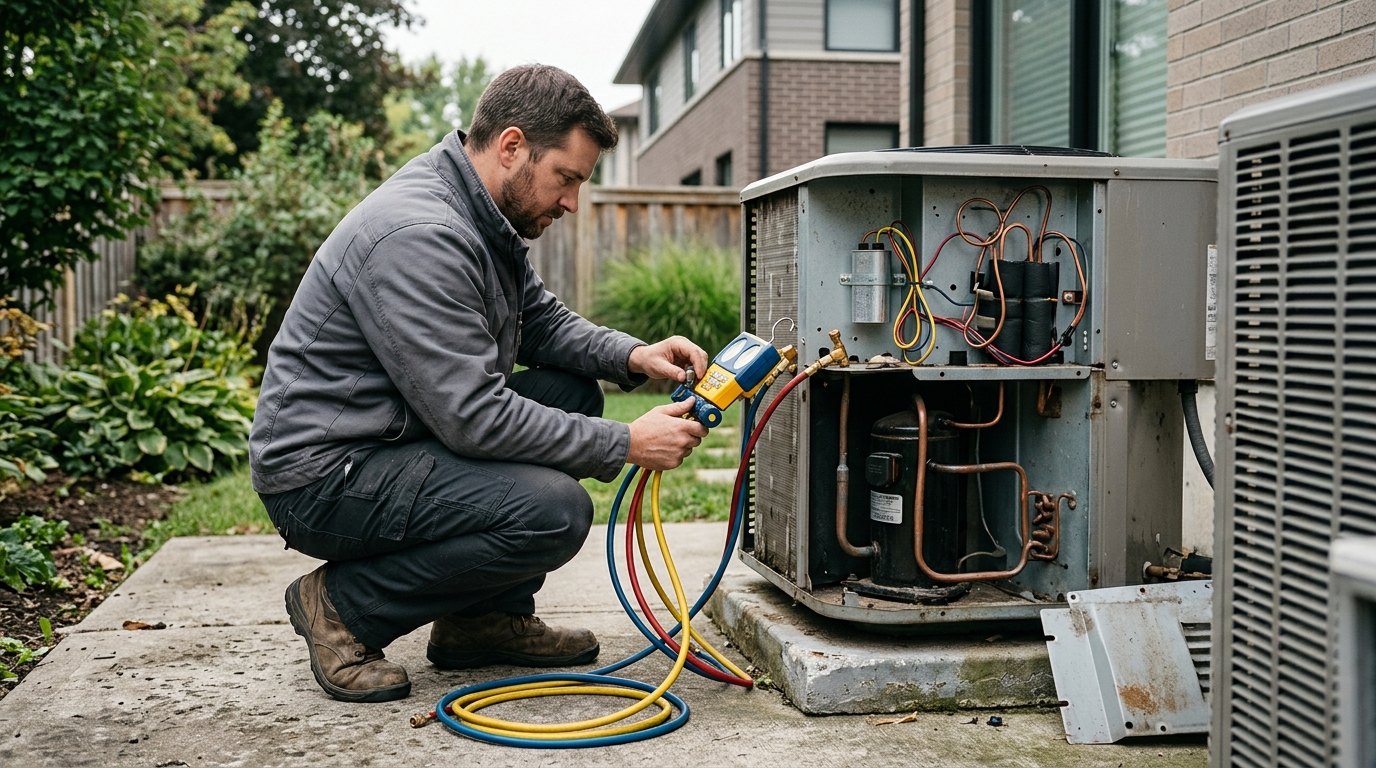
If your air conditioner is struggling, the repair-or-replace decision comes down to one core calculation: compare the repair cost against 50% of the unit's current replacement value. If the repair exceeds that threshold - replace. If it's under - repair. Everything else is context that sharpens that judgment.
That rule of thumb has saved homeowners thousands of dollars in both directions: some avoiding a premature replacement they didn't need, others stopping the cycle of throwing money at a unit that was already costing them more in energy bills than a new system would. Here's how to work through the full decision with confidence.
Know Your Unit's Age First
The average central air conditioner lasts 15 to 20 years. Window units typically run 10 to 15. If your system is under 10 years old, repair is almost always the right call unless the damage is catastrophic. If it's past 15 years, replacement deserves serious consideration even for mid-range repair costs.
Age matters for a second reason: refrigerant. Systems manufactured before 2010 commonly use R-22 (Freon), which the EPA phased out of production. R-22 refrigerant is now scarce and expensive - prices have climbed dramatically since the phase-out completed in 2020. If your old unit needs a refrigerant recharge, you may pay more per pound for the refrigerant alone than a newer system costs to run for an entire season.
The 5,000 Rule: A Practical Calculator
HVAC professionals frequently cite the 5,000 Rule as a reliable decision framework: multiply the unit's age (in years) by the estimated repair cost. If the result exceeds 5,000 - replace the unit.
- Example A: 8-year-old unit, $400 repair → 8 × 400 = 3,200 → Repair
- Example B: 14-year-old unit, $450 repair → 14 × 450 = 6,300 → Replace
- Example C: 5-year-old unit, $900 repair → 5 × 900 = 4,500 → Repair
- Example D: 16-year-old unit, $350 repair → 16 × 350 = 5,600 → Replace
This rule isn't perfect, but it forces you to weigh both age and cost simultaneously rather than reacting purely to sticker shock on a repair quote.
Repair vs. Replace: 6 Key Comparison Factors
Factor Lean Toward Repair Lean Toward Replacement Unit Age Under 10 years Over 15 years Repair Cost Under 30% of replacement cost Over 50% of replacement cost Repair Frequency First or second repair ever Third+ repair in 3 years Energy Efficiency SEER rating above 14 SEER rating below 13 (pre-2015 units) Refrigerant Type R-410A or R-32 system R-22 (Freon) system requiring recharge Warranty Status Parts or labor still under warranty All warranties expiredSpecific Repairs: Which Ones Are Worth It?
Not all AC problems carry the same weight. Some repairs are straightforward and have a strong return; others signal systemic decline.
Repairs Worth Making
- Capacitor replacement: Typically $150–$300. Capacitors fail often and are inexpensive relative to impact. Almost always worth it.
- Contactor replacement: $150–$250. Same logic - small part, big function, easy fix.
- Refrigerant recharge (R-410A or R-32): $200–$400 depending on system size. Worth it if the leak is sealed and the unit is under 12 years old.
- Fan motor replacement: $300–$600. Reasonable on a unit under 10 years old with no other issues.
Repairs That Signal It's Time to Replace
- Compressor failure: The compressor is the heart of the system. Replacement costs $1,200–$2,500+. On any unit over 10 years old, replacing the entire system almost always makes more financial sense.
- Evaporator or condenser coil failure: $600–$2,000+. These repairs on aging units typically trigger the 5,000 Rule threshold.
- Multiple simultaneous failures: If a technician finds three or four problems at once, the unit is in systemic decline. Fixing one won't stop the next.
Don't Ignore the Energy Bill Signal
Your monthly electricity bill is one of the most honest performance reports your AC will ever give you. If cooling costs have crept up 20–30% over two or three summers without a corresponding change in usage patterns or utility rates, your system's efficiency is degrading.
Modern AC units carry SEER2 ratings (the updated efficiency standard that took effect in 2023) of 14.3 to 26. Systems installed before 2010 often operated at SEER 10 or below. Replacing a SEER 10 unit with a SEER 18 system cuts cooling energy consumption by roughly 44%. In hot climates, that difference pays back the installation cost in 5 to 8 years - often less when utility incentives apply.
Factor In Rebates and Incentives
Before writing off replacement as too expensive, check current federal tax credits and local utility rebates. The Inflation Reduction Act's energy efficiency provisions have made high-efficiency HVAC upgrades eligible for significant tax credits. Many utility companies layer their own rebates on top. In some markets, the combined incentives reduce the effective replacement cost by $1,500 to $3,000 - which can swing a borderline repair decision clearly toward replacement.
Ask your HVAC contractor specifically about Energy Star certified equipment and heat pump options, which often qualify for the largest incentives.
When Replacement Is Non-Negotiable
Stop the repair-or-replace debate entirely and move straight to replacement quotes when any of these conditions apply:
- The compressor has failed on a unit older than 10 years.
- The system uses R-22 refrigerant and needs a recharge or coil repair.
- You've spent more than 40% of replacement cost on repairs within the last two years.
- The unit is over 20 years old, regardless of the repair quote.
- Your home has persistent humidity problems the current system can't control- this is a sizing or technology issue no repair will solve.
Get Two Quotes Before You Decide
Never make a repair-or-replace decision based on a single contractor's opinion. Get at least two independent assessments. Ask each technician to itemize what's wrong, what it will cost to fix, and how long the repaired unit can reasonably be expected to last. A contractor who gives you a realistic remaining-lifespan estimate - even if it means less immediate business for them - is the one worth trusting.
Also ask for a replacement quote during the same visit. Comparing both numbers side by side, with the 5,000 Rule and the 50% threshold in hand, gives you everything you need to make a clear decision.
---How do I know if my AC repair is too expensive?
Use the 5,000 Rule: multiply the unit's age in years by the repair cost in dollars. If the result exceeds 5,000, replacement is the stronger financial choice. Also compare the repair cost directly against 50% of what a new equivalent system would cost installed - if the repair exceeds that figure, replace.
Is a failing compressor worth fixing?
Rarely. Compressor replacement costs $1,200–$2,500 or more, and compressor failure on a unit over 10 years old almost always triggers both the 5,000 Rule and the 50% threshold simultaneously. In most cases, replacing the entire system is the better investment.
What SEER rating should I look for in a new AC unit?
Target a minimum SEER2 rating of 15 to 16 for most climates. In hot southern climates where the AC runs 6–8 months per year, a SEER2 rating of 18 or higher pays back the premium cost faster through reduced energy bills. Higher-rated units also qualify for larger federal and utility rebates.
Does R-22 refrigerant affect my repair decision?
Yes, significantly. R-22 production was banned in the U.S. as of 2020, making the remaining supply expensive and increasingly scarce. If your system needs an R-22 recharge or any repair tied to refrigerant handling, treat it as a strong signal to replace rather than repair - you're investing in an infrastructure that has no long-term future.
When is the best time of year to replace an AC unit?
Late fall and winter - October through February - are the best times. Demand for HVAC contractors drops sharply after cooling season ends, which means faster scheduling, more negotiating room on installation costs, and sometimes better equipment pricing. Avoid emergency summer replacements if you can; peak season pricing and scheduling delays add cost and stress.
