From the blog
How to Improve Indoor Air Quality This Season
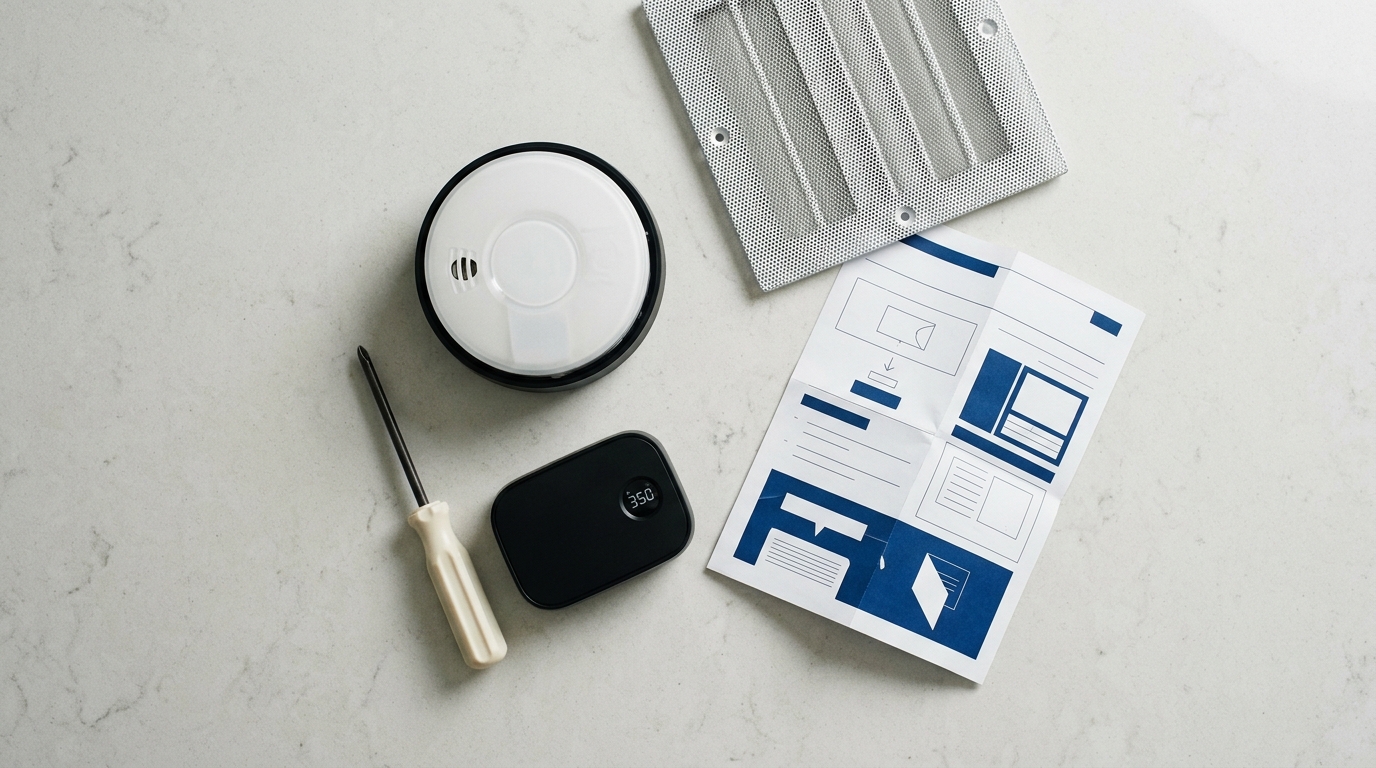
The single most effective way to improve indoor air quality is to combine source control, mechanical ventilation, and HEPA filtration - in that order. Eliminating pollutants at their origin beats any air purifier you can buy, but layering all three strategies cuts indoor particulate matter by up to 85% compared to doing nothing.
Indoor air is typically 2 to 5 times more polluted than outdoor air, according to EPA research that has been consistently replicated across multiple decades. During colder months, when windows stay shut and heating systems run continuously, that ratio can spike even higher. The good news: you can make meaningful improvements in a single weekend without an expensive contractor.
Step 1: Identify Your Pollutant Sources First
Before buying equipment, do a pollutant audit. The most common indoor air quality offenders fall into three categories:
- Particulate matter (PM2.5 and PM10): Cooking smoke, candles, pet dander, dust mites, and tracked-in outdoor particles
- Volatile organic compounds (VOCs): Off-gassing from furniture, paint, cleaning products, air fresheners, and synthetic carpets
- Biological contaminants: Mold spores, bacteria, and viruses - especially elevated in poorly ventilated bathrooms and basements
- Combustion byproducts: Carbon monoxide, nitrogen dioxide, and ultrafine particles from gas stoves, fireplaces, and attached garages
A consumer-grade air quality monitor - brands like Airthings Wave Plus or IQAir AirVisual Pro - measures CO2, VOCs, humidity, and PM2.5 in real time. Running one for 48 hours before making changes gives you a baseline you can actually compare against later.
Step 2: Upgrade Your HVAC Filter to MERV 13 or Higher
HVAC filters are rated on the MERV scale (Minimum Efficiency Reporting Value), which runs from 1 to 20. Here is what each tier actually captures:
- MERV 1–4: Large dust particles only - the fiberglass filter that came with your system
- MERV 8: Mold spores, pet dander, and most dust - the minimum worth using
- MERV 11: Fine dust, smoke, and some bacteria - a solid middle-ground choice
- MERV 13: Virus-sized particles, smoke, and PM2.5 - recommended by the EPA and ASHRAE for residential use
- MERV 16–20: Hospital-grade filtration - requires a system evaluation before use, as airflow restriction can damage residential HVAC equipment
Swapping a MERV 4 filter for a MERV 13 filter in a central HVAC system is the highest-ROI single change available to most homeowners. Change it every 60 to 90 days - not the "up to 12 months" marketing claim printed on the packaging.
Step 3: Add Standalone HEPA Air Purifiers to High-Use Rooms
Central HVAC filtration does not cover rooms when the system is off, and it does nothing for particle resuspension from foot traffic. Standalone HEPA air purifiers fill that gap.
When choosing a unit, match the purifier's CADR (Clean Air Delivery Rate) to your room size. The standard formula: multiply room square footage by ceiling height (typically 8 feet), then look for a CADR that can exchange that air volume at least 4 to 5 times per hour.
Practical example: A 200-square-foot bedroom with 8-foot ceilings has 1,600 cubic feet of air. Four air changes per hour means you need a CADR of at least 107 CFM. Most mid-range purifiers from brands like Coway, Winix, or Blueair handle that comfortably.
Avoid purifiers that generate ozone as a byproduct. Ozone is a lung irritant, and California's Air Resources Board has banned ozone-generating air purifiers from retail sale for this reason. Look for the California Air Resources Board (CARB) certification label before purchasing.
Step 4: Control Humidity Between 30% and 50%
Humidity is the variable most homeowners ignore, and it drives both mold growth and dust mite populations more than almost any other factor. Dust mites cannot survive below 50% relative humidity. Mold growth accelerates above 60%.
In winter, forced-air heating systems typically drive indoor humidity below 25%, which causes its own problems: dry mucous membranes, increased susceptibility to airborne viruses, and cracked wood. A whole-home humidifier integrated with your HVAC, or room-sized ultrasonic humidifiers from brands like Levoit or Honeywell, keeps levels in the target 30–50% range.
In summer or in humid climates, run a dehumidifier in basements and any space that smells musty. The Santa Fe Classic and Aprilaire 1820 are commonly recommended models rated for whole-basement use.
Step 5: Ventilate Intentionally - Even in Winter
Modern homes are sealed tightly for energy efficiency, which means pollutants build up faster than in older, drafty construction. Mechanical ventilation is the solution.
- Exhaust fans: Run your kitchen range hood every time you cook - it removes combustion gases and PM2.5 at the source. Bathroom fans should run for at least 20 minutes after showers.
- Energy Recovery Ventilators (ERVs): These devices exchange stale indoor air for fresh outdoor air while recovering 70–80% of the heating or cooling energy. An ERV is the gold-standard mechanical ventilation solution for tight, energy-efficient homes.
- Strategic window ventilation: On days when outdoor air quality is good (check AirNow.gov for your local AQI), opening windows on opposite sides of the house for 10–15 minutes flushes accumulated VOCs and CO2 more effectively than any purifier.
Step 6: Switch to Low-VOC Products and Eliminate Fragrance
This step costs nothing. Scented candles, plug-in air fresheners, and synthetic fragrance sprays are among the top sources of VOCs in residential spaces. The irony is real: products marketed to improve your air are actively polluting it.
Switch to fragrance-free or naturally scented cleaning products, choose low-VOC or zero-VOC paint when repainting (most major brands now offer certified options), and let new furniture and carpets off-gas in a garage or well-ventilated space for 72 hours before bringing them inside.
Indoor Air Quality Improvement: Strategy Comparison
Strategy Targets Typical Cost Effectiveness MERV 13 HVAC filter PM2.5, dander, smoke $20–$40 per filter Very High Standalone HEPA purifier PM2.5, allergens, smoke $100–$400 per unit High (room-level) ERV / HRV installation CO2, VOCs, all pollutants $1,500–$4,000 installed Very High (whole-home) Dehumidifier / humidifier Mold, dust mites, dryness $150–$600 High (humidity-driven) Eliminating scented products VOCs $0 High Range hood / exhaust fans Combustion gases, PM2.5 $0 (existing fans) High at sourceQuick-Win Checklist for This Weekend
- Replace your HVAC filter with a MERV 13 option today
- Buy an air quality monitor and establish a 48-hour baseline
- Remove all scented candles, plug-ins, and synthetic sprays from your main living areas
- Check bathroom and kitchen exhaust fans - clean them if the covers are dusty, replace them if airflow is weak
- Measure indoor humidity with a $15 hygrometer; buy a humidifier or dehumidifier if you are outside the 30–50% range
- Place a HEPA purifier in the bedroom - you spend roughly 8 hours per night there
What is the fastest way to improve indoor air quality?
Replace your HVAC filter with a MERV 13 version and eliminate scented candles and synthetic air fresheners. These two steps are free or near-free, take under an hour, and produce measurable reductions in PM2.5 and VOC levels within 24 hours.
Do houseplants actually improve indoor air quality?
No, not in any meaningful way at residential scale. The famous NASA study was conducted in sealed, tiny chambers - not real rooms. You would need hundreds of plants per room to match the particulate reduction of a single HEPA purifier. Plants are great for other reasons, but do not rely on them for air quality improvement.
How often should I change my HVAC air filter?
Every 60 to 90 days for MERV 13 filters in a typical home. If you have pets, allergies, or live near a high-traffic road, check the filter at 30 days. A visibly gray or clogged filter is reducing airflow and strain your HVAC system, which raises energy costs on top of degrading air quality.
Is an air purifier necessary if I already have a MERV 13 HVAC filter?
Yes, for bedrooms and high-use rooms. A central HVAC filter only cleans air when the system is actively running and circulating air through the return ducts. A standalone HEPA purifier cleans the air in a specific room continuously, including at night when your system may be in a reduced cycle. The two work together, not as substitutes for each other.
What indoor humidity level prevents mold and dust mites?
Keep relative humidity between 30% and 50%. Dust mites cannot reproduce below 50% humidity. Mold growth requires sustained humidity above 60%. In winter, forced-air heating commonly drops humidity below 25%, so a humidifier is often needed. In humid summers or basements, a dehumidifier is the appropriate tool.
